
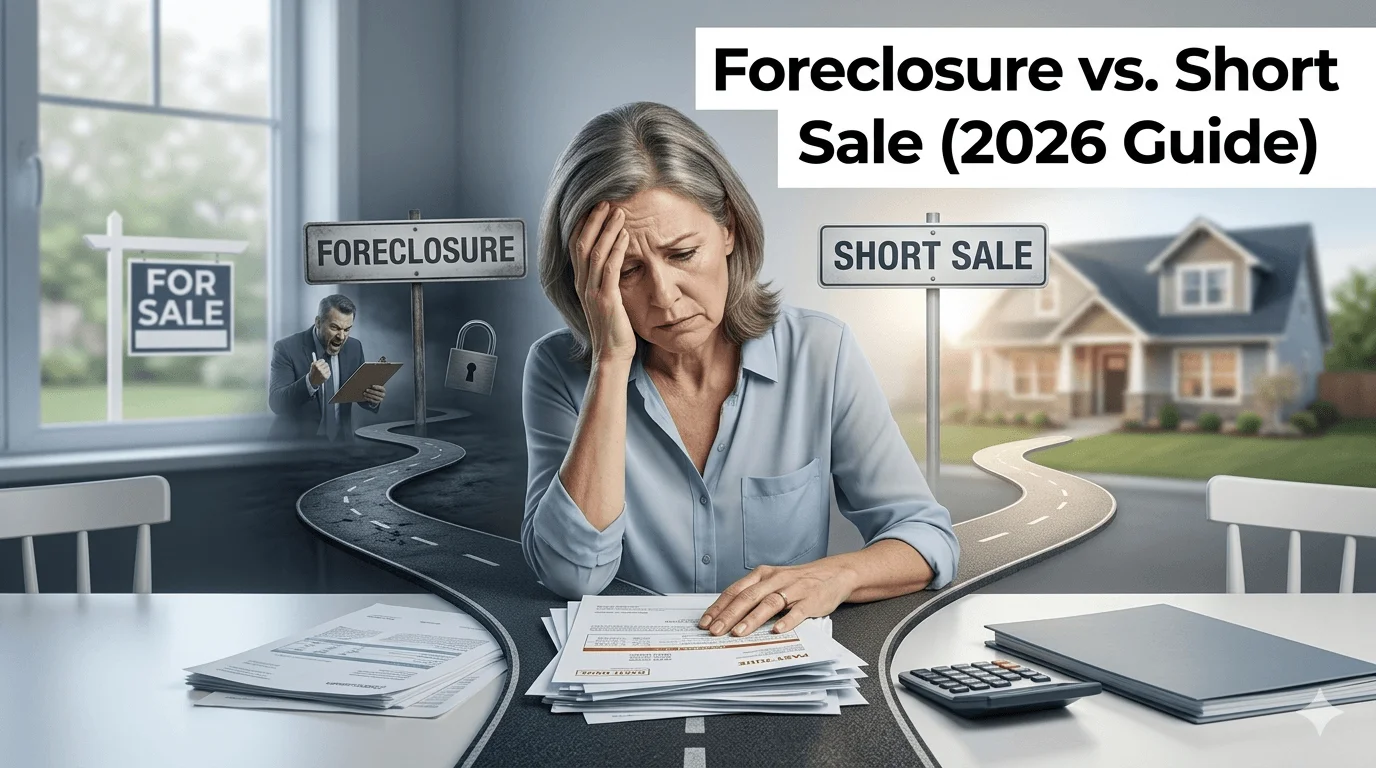
The housing market in 2026 is facing a quiet but significant shift. While home values remain relatively stable in many regions, rising interest rates, inflation pressure, and tighter lending standards have increased financial strain for homeowners. As a result, more people are now forced to consider difficult decisions about their properties—most notably choosing between a Foreclosure vs. Short Sale.
This choice is not just financial; it’s emotional, legal, and long-term. For many homeowners, understanding what is a short sale vs foreclosure can determine whether they recover financially in a few years or spend a decade rebuilding their credit.
A foreclosure happens when a lender takes back a property due to missed mortgage payments. A short sale, on the other hand, is when a homeowner sells their property for less than what they owe—with the lender’s approval. Both options arise from financial hardship, but they lead to very different outcomes.
In 2026, industry data suggests foreclosure timelines are becoming faster due to digital processing improvements and lender efficiency. At the same time, lenders are increasingly open to short sales because they reduce losses and legal costs. This makes the decision between Foreclosure vs. Short Sale more important than ever.
This guide will walk you through every aspect of the process—from legal mechanics to credit impact, investor opportunities, and future market trends—so you can make the most informed decision possible.
Understanding the Foreclosure Process in 2026
To fully grasp Foreclosure vs. Short Sale, you need to understand how foreclosure works today.
Foreclosure is a legal process where a lender repossesses a property after the borrower fails to meet mortgage obligations. In 2026, this process has become more streamlined due to digital filings and automated servicing systems.
Judicial vs. Non-Judicial Foreclosure
There are two main types of foreclosure:
Judicial Foreclosure
- Requires court involvement
- Longer timeline (6–18 months depending on state)
- More legal protections for homeowners
Non-Judicial Foreclosure
- No court process required
- Faster (as little as 90–120 days)
- Common in states like California and Texas
The difference matters when comparing what’s the difference between a foreclosure and a short sale, because foreclosure often removes control from the homeowner completely.
Foreclosure Timeline (2026 Update)
Typical stages include:
- Missed payments (30–90 days)
- Notice of default
- Pre-foreclosure period
- Auction or trustee sale
- REO (bank-owned property)
Modern platforms like HUD Homes and Fannie Mae HomePath allow buyers to track these listings once they become bank-owned.
Key Takeaway
When asking what’s the difference between foreclosure and short sale, the biggest distinction here is control. In foreclosure, the lender takes over. In a short sale, the homeowner still participates in the process.
The Mechanics of a Short Sale
A short sale is often misunderstood, yet it plays a major role in resolving distressed mortgages.
In short sale in real estate vs foreclosure, the homeowner works with the lender to sell the home before foreclosure happens.
Why Lenders Approve Short Sales
Banks don’t approve short sales out of generosity. They do it because it’s financially smarter.
Reasons include:
- Avoiding legal costs of foreclosure
- Preventing property deterioration
- Reducing holding costs (maintenance, taxes)
- Faster asset recovery
Institutions like Freddie Mac and Fannie Mae actively promote loss mitigation strategies like short sales.
The Short Sale Process
- Homeowner proves financial hardship
- Property is listed (often below market value)
- Buyer submits offer
- Lender reviews and approves or rejects
- Sale closes with lender absorbing loss
Roles Involved
- Homeowner: Initiates process
- Real estate agent: Markets property
- Lender’s loss mitigation team: Reviews deal
- Buyer: Often an investor
This process explains what is difference between foreclosure and short sale—one is forced, the other negotiated.
Foreclosure vs. Short Sale: A Direct Comparison
Understanding Foreclosure vs. Short Sale requires comparing their real-world impact.
Credit Impact
Credit damage is one of the biggest concerns.
| Factor | Short Sale | Foreclosure |
|---|---|---|
| Credit Score Drop | 50–150 points | 100–200+ points |
| Recovery Time | 2–4 years | 5–7 years |
| Future Loan Eligibility | Faster | Slower |
Credit agencies like FICO and Experian confirm that foreclosure has a more severe long-term impact.
This is a key reason people ask: is a short sale better than a foreclosure.
Financial Liability
Another major difference between short sale and foreclosure is what happens to the remaining debt.
- Short sale: lender may forgive deficiency (depending on state laws)
- Foreclosure: higher risk of deficiency judgment
Tax implications also vary depending on relief laws.
Control & Timeline
Short sales give homeowners:
- More control
- Ability to stay longer
- Less public record damage
Foreclosure removes control completely.
This highlights what’s the difference between a short sale and foreclosure in practical terms.
Alternative Loss Mitigation: Deed in Lieu
A lesser-known option is a deed in lieu of foreclosure.
What It Is
The homeowner voluntarily transfers ownership to the lender to avoid foreclosure.
Comparison
- Short sale vs deed in lieu: short sale involves selling, deed in lieu does not
- deed in lieu of foreclosure vs short sale: deed is simpler but offers fewer protections
This option sits between foreclosure and short sale in terms of impact.
Pre-Foreclosure vs. Short Sale
Pre-foreclosure is often misunderstood.
It’s not a separate option—it’s a phase.
What Happens in Pre-Foreclosure
- Homeowner has missed payments
- Lender issues notice
- Property may be listed
At this stage, a short sale can still happen.
So when comparing pre foreclosure vs short sale, remember:
- Pre-foreclosure = timeline stage
- Short sale = solution
The Investor Perspective: Finding Distressed Properties
For investors, Foreclosure vs. Short Sale represents opportunity.
Where to Find Deals
Platforms include:
- Zillow
- Redfin
- Foreclosure.com
Internal resources:
- https://budgetwise.com.ng/how-to-find-foreclosure-homes-for-sale/
- https://budgetwise.com.ng/how-to-find-government-backed-foreclosure-listings/
Risk vs Reward
Short sales:
- Lower competition
- Longer closing time
Foreclosures:
- Faster purchase
- Higher repair risk
Making the Choice: Which Path is Better for You?
Choosing between Foreclosure vs. Short Sale depends on your situation.
Decision Matrix
| Factor | Short Sale | Foreclosure |
|---|---|---|
| Credit Impact | Lower | Higher |
| Control | More | None |
| Timeline | Longer | Faster |
| Stress Level | Moderate | High |
For most homeowners, the answer to is a short sale better than a foreclosure is yes—if you qualify.
The 2026 Housing Market Outlook
In 2026, lenders are increasingly favoring short sales due to:
- Rising operational costs
- Faster recovery timelines
- Digital approval systems
This trend directly affects Foreclosure vs. Short Sale decisions.
Conclusion
Choosing between a Foreclosure vs. Short Sale is one of the most important financial decisions a homeowner can face. It impacts your credit, your future buying ability, and your emotional well-being.
While foreclosure may seem inevitable in some situations, a short sale often provides a more controlled and less damaging alternative. It allows you to exit your mortgage responsibly while minimizing long-term consequences.
However, every case is different. Factors such as state laws, lender policies, and personal finances all play a role in determining the best path forward.
Before making any decision, it’s critical to:
- Consult a HUD-approved housing counselor
- Speak with a qualified real estate attorney
- Work with an experienced real estate agent
In 2026, more tools and support systems are available than ever before. Whether you’re trying to save your home or move on from financial hardship, taking action early gives you the best chance at recovery.
The key is simple: don’t wait until foreclosure is final. Explore your options, understand the differences, and make a decision that protects your financial future.

