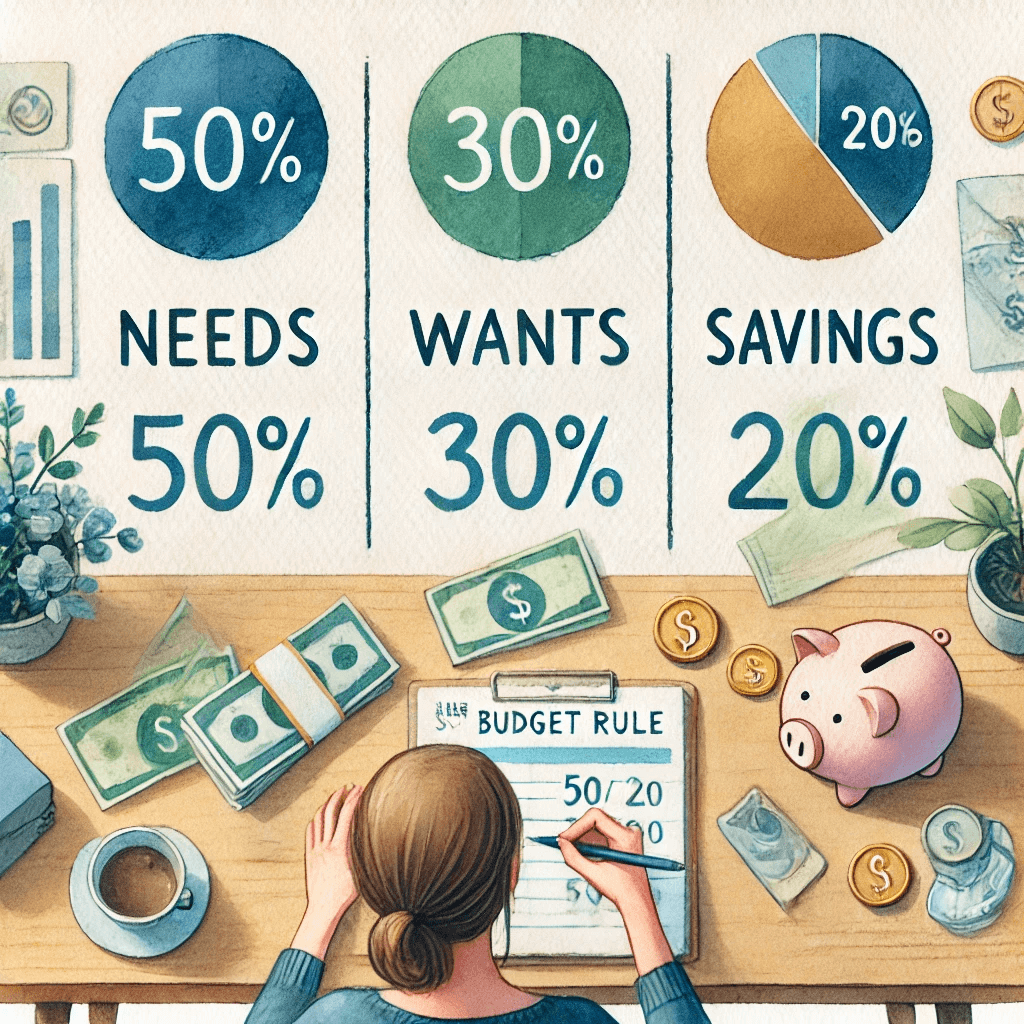
Managing money can feel overwhelming, especially when trying to balance bills, savings, and personal goals. The good news is that effective budgeting doesn’t have to be complicated. One of the simplest and most effective budgeting methods is the 50/30/20 budget rule — a strategy that helps you plan your spending, enjoy life, and still save for the future.
The 50 30 20 rule budget divides your income into three categories: needs, wants, and savings. This structure ensures that your financial life stays balanced, helping you reduce stress and build financial freedom over time. In this guide, you’ll learn exactly how the 50 30 20 budget rule works, how to use it step-by-step, and why it remains one of the best budgeting rules in 2025.
What Is the 50/30/20 Rule?
The 50 30 20 rule is a simple but powerful budget rule that divides your after-tax income into three parts:
- 50% for needs
- 30% for wants
- 20% for savings and debt repayment
This system was popularized by U.S. Senator Elizabeth Warren and Amelia Warren Tyagi in their book All Your Worth: The Ultimate Lifetime Money Plan. It has since become one of the most popular personal finance methods worldwide.
The beauty of the 50 30 20 rule budget lies in its flexibility — you can adapt it to your lifestyle, whether you’re a student, freelancer, or full-time employee. It provides structure while allowing you to enjoy your income responsibly.
Understanding the 50/30/20 Budget Rule
The 50 30 20 budget rule ensures that every dollar you earn has a clear purpose. Here’s what each percentage means in detail.
50% – Needs
Needs include the essential expenses you cannot avoid. These are the bills and costs that keep your life running smoothly. Examples include:
- Rent or mortgage payments
- Groceries
- Utilities (electricity, water, internet)
- Insurance premiums
- Transportation
- Minimum debt payments
Your needs should make up no more than half of your income. If they exceed 50%, it might be time to reduce certain costs — such as moving to a cheaper apartment, refinancing loans, or cutting unnecessary subscriptions.
30% – Wants
Wants are the things that make life enjoyable but aren’t essential. These include:
- Dining out or ordering takeout
- Streaming subscriptions
- Gym memberships
- Fashion or hobbies
- Vacations and entertainment
The 30% allocation gives you room to enjoy your earnings without feeling guilty, ensuring your financial plan remains realistic and sustainable.
20% – Savings and Debt Repayment
This portion is dedicated to building your financial future. It covers:
- Emergency savings
- Investments (stocks, ETFs, or real estate)
- Retirement contributions
- Paying off debt faster than the minimum requirement
Even if you start small, setting aside this 20% consistently can transform your financial stability.
How to Apply the 50/30/20 Rule Step-by-Step
Step 1: Calculate Your Monthly Income
Determine your total monthly income after taxes. Include your primary job, freelance work, rental income, or any side hustles. The 50 30 20 rule is flexible — it works for all income levels.
Step 2: Divide Your Income
Use a 50 30 20 rule calculator to divide your earnings automatically. For example, if your monthly income is $4,000:
- Needs: $2,000
- Wants: $1,200
- Savings/Debt Repayment: $800
This quick calculation helps visualize where your money should go each month.
Step 3: Track and Adjust
Tracking your expenses is essential. Use budgeting tools like Mint or You Need A Budget (YNAB) to record spending and make sure you stay within your set categories.
Step 4: Review Each Month
At the end of the month, review your spending habits. Did you overspend on wants? Did you manage to save the full 20%? Adjust as needed and continue improving your discipline.
Example of a 50/30/20 Rule Budget
Let’s imagine you earn $3,500 per month.
| Category | Percentage | Amount |
|---|---|---|
| Needs | 50% | $1,750 |
| Wants | 30% | $1,050 |
| Savings/Debt Repayment | 20% | $700 |
This structure ensures that every dollar is intentionally allocated. You can even use a 50 30 20 rule calculator to automate the process and make your budgeting smoother.
Why the 50/30/20 Rule Works
The 50 30 20 budget rule is effective because it creates balance between financial responsibility and personal freedom. You’re not forced to cut all enjoyment out of your budget — instead, you spend mindfully.
It’s also highly adaptable. Whether you’re saving for a down payment, repaying student loans, or trying to build an emergency fund, the 50 30 20 rule budget gives you a clear framework to follow.
Benefits of Using the 50/30/20 Rule
- Simplicity – No complex formulas or spreadsheets are needed.
- Flexibility – Works for any income level and lifestyle.
- Clarity – You’ll always know where your money is going.
- Financial Growth – Encourages consistent savings habits.
- Reduced Stress – Creates a sense of control over your finances.
Common Mistakes to Avoid

Even though the 50 30 20 rule is simple, some people make mistakes that limit their results. Watch out for these:
- Treating wants as needs — such as upgrading your phone unnecessarily.
- Forgetting irregular expenses like annual insurance or car maintenance.
- Failing to review and adjust the budget each month.
- Ignoring long-term goals when setting short-term priorities.
Tools to Help You Use the 50/30/20 Rule
Technology makes budgeting effortless. Here are some of the best tools to help apply the 50 30 20 rule budget:
- You Need A Budget (YNAB) – Great for assigning every dollar a job.
- Mint – Automatically tracks income and expenses.
- EveryDollar – Perfect for visualizing your progress.
- NerdWallet 50/30/20 Calculator – A handy online tool to break down your income.
Each app simplifies tracking so you can focus on improving your financial habits.
Adjusting the 50/30/20 Rule for Different Incomes
If your income is lower, you may find that 50% doesn’t cover all your needs. In this case, slightly adjust your ratios — for example, 60% for needs, 25% for wants, and 15% for savings.
For higher earners, you can flip the model — 40% needs, 30% wants, and 30% savings — accelerating your path to financial independence.
The key is flexibility; the budget rule is a guide, not a restriction.
Combining the 50/30/20 Rule with Other Budgeting Methods
You can also blend this method with others like zero-based budgeting or cash envelope budgeting for more control. For instance, after dividing your income using the 50/30/20 model, you can track each category manually using envelopes or digital folders.
If you’re curious about how zero-based budgeting works, you can read our in-depth guide here:
👉 Zero-Based Budgeting (ZBB): Meaning, Example, and How It Works in 2025
Real-Life Tips to Make the 50/30/20 Rule Work for You
- Use grocery apps to save money and stay within your “needs” category.
- Automate savings so the 20% goes directly into a separate account.
- Reassess your “wants” every few months to avoid lifestyle inflation.
- Track your goals with visual tools — seeing progress keeps you motivated.
Final Thoughts
The 50/30/20 rule isn’t just another budgeting trend; it’s a timeless principle that helps you control spending, reduce debt, and build long-term wealth. By following this budget rule, you’ll learn to prioritize needs, enjoy your wants responsibly, and make saving a consistent habit.
Whether you’re learning how to budget for the first time or looking to refine your financial plan, the 50 30 20 rule budget gives you a clear path to stability and independence. With commitment and a little discipline, this rule can guide you toward financial freedom—one smart decision at a time.